About this climb
Standing directly above Everest Base Camp, Pumori is a striking, committing 7,000 m expedition on snow and ice, with an unrivalled view straight down the Khumbu icefall to Everest, Lhotse and Nuptse.
The Pumori Expedition is a challenging climb above 7,000 meters. Mount Pumori (7,161 m / 23,494 ft) is one of the more demanding 7,000 m objectives in the Nepal Himalaya, sitting on the Nepal–China border in the Mahalangur Himal, about 8.5 km west of Everest and 4.5 km from Nuptse. The name Pumori means "unmarried daughter" in the Sherpa language, given by George Mallory.
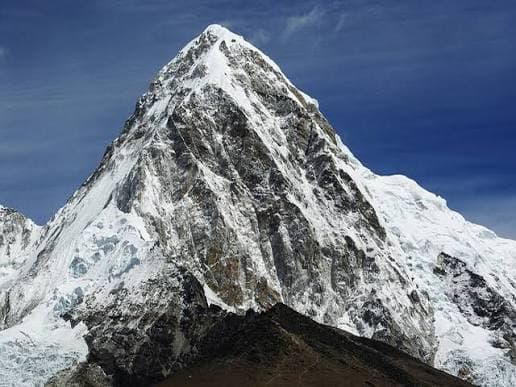
The peak was first climbed by a German–Swiss expedition, reaching the summit via the Southeast Face on May 17, 1962. A new route on the South Face was climbed by two Czech climbers in 1996. An outlier of Pumori, Kala Patthar (5,643 m / 18,513 ft), appears as a large brown bump below the mountain's impressive south face.
Roughly 600 people have summited Pumori since 1962. The mountain offers treasured views of Mt. Everest and Tibet, including the Rongbuk Glacier. It has been climbed via both the Southeast and Southwest routes, with the Southeast considered the standard line. Both spring and autumn are suitable climbing seasons. Pumori suits climbers seeking a demanding 7,000 m objective within roughly a month, and the route calls for technical climbing skills, prior 8,000 m or comparable high-altitude experience, and a high level of physical fitness.
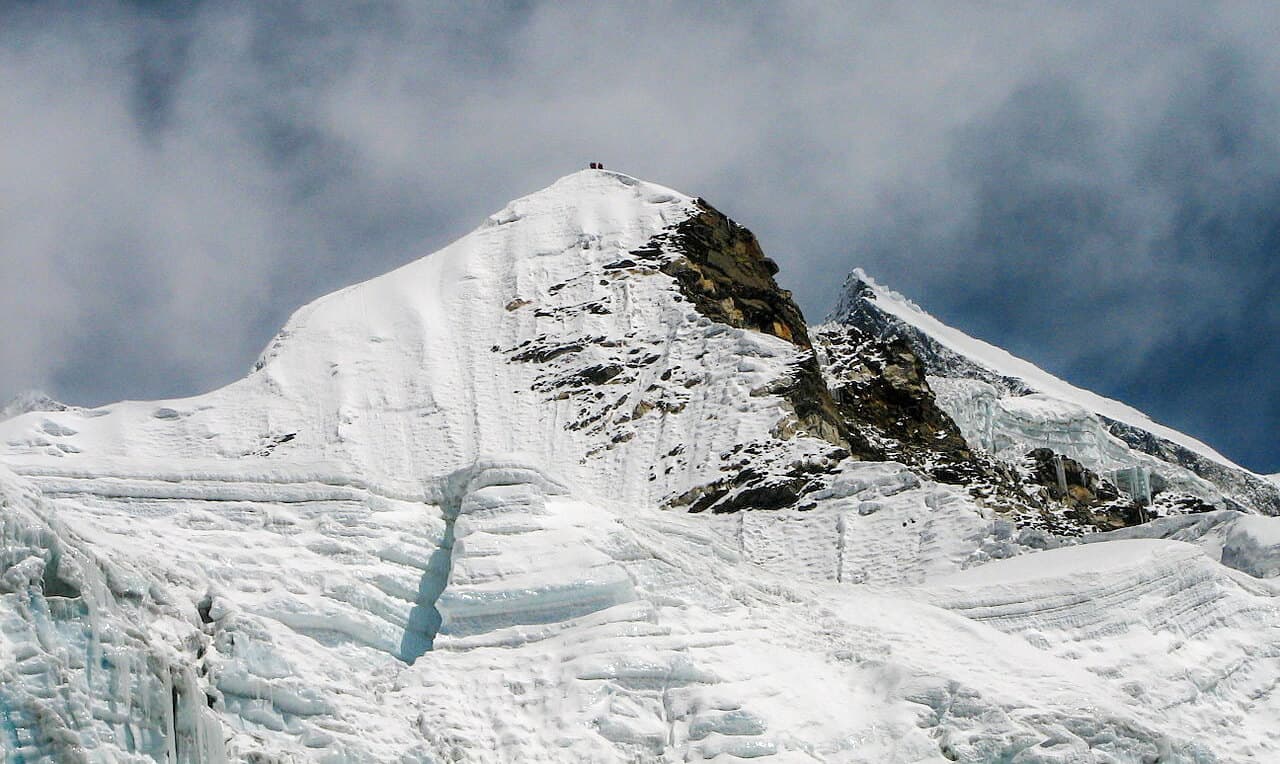
The western flank is a notably technical and challenging approach: climbers heading up the Southwest or East side must ascend roughly 1,000 m of glacial blue ice, rising at 50–55 degrees with occasional 70-degree bulges, with fixed ropes set along the way and a steady rhythm of foot placement and jumar use required to make progress. The more commonly used Southeast route runs through the Khumbu region up the Khumbu Glacier to Lobuche (4,750 m). After a scenic flight to Lukla, the trek continues through Namche Bazaar (3,400 m), Tengboche (3,800 m), Pheriche (4,200 m), Lobuche (4,710 m), and Gorak Shep (5,150 m) to Everest/Lhotse Base Camp (5,200 m) — typically an 8–9 day approach from Kathmandu to Advanced Base Camp. Highlights along the way include magnificent Himalayan views, the scenic flight to Lukla, the Sherpa and Hillary Museum, unforgettable views of Everest and the Tibetan plateau, abundant flora and fauna, and Tengboche Monastery.
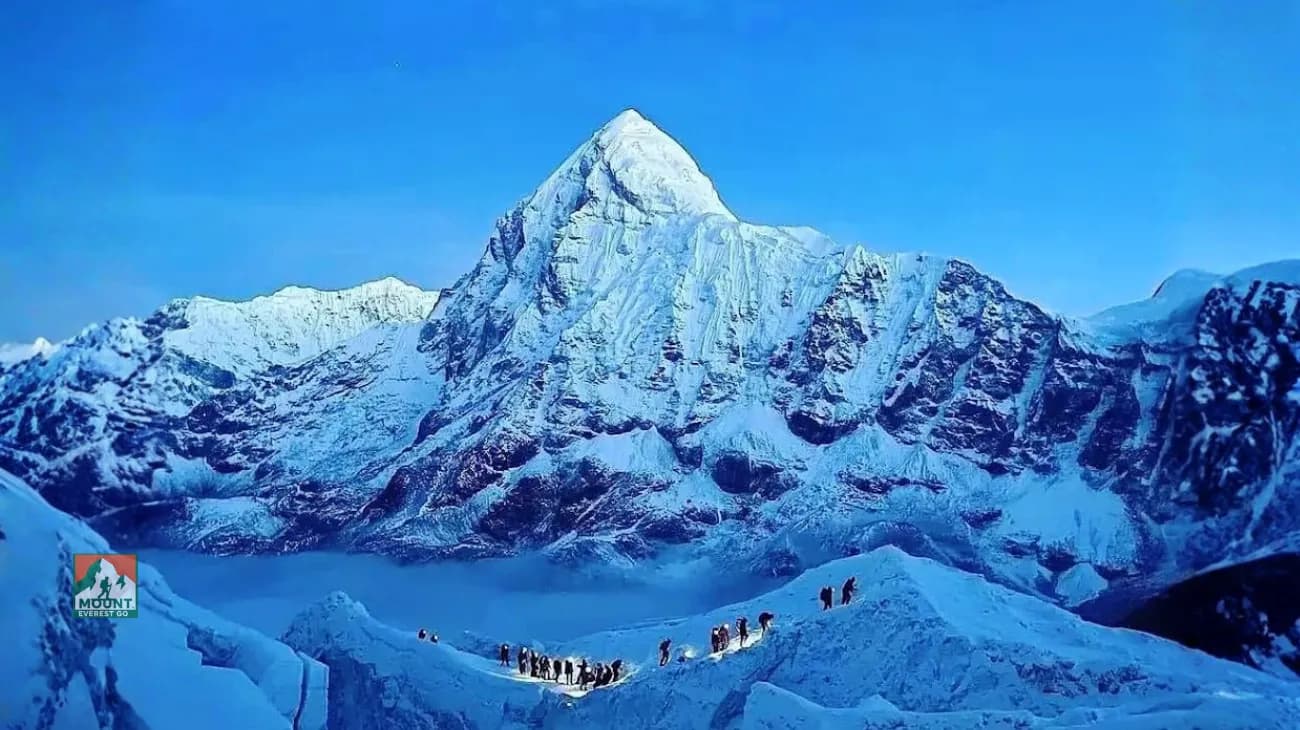
The standard route follows the Southeast Ridge, a Grade 3 snow-and-ice climb requiring solid alpine technique and familiarity with the effects of high altitude. Camps I to III are typically set above base camp at 5,300 m / 17,388 ft. From base camp, the route crosses glaciers and a knife-edged ridge for 4–5 hours to reach Camp I at 5,700 m / 18,701 ft. From Camp I, a 40–60 degree face and a snow wall lead to Camp II at 6,200 m / 20,341 ft. From Camp II, ice walls and crevasses lead to Camp III at 6,500 m / 21,325 ft, from where the route crosses further crevasses and the Pumori cliff en route to the summit.
 Nepal Mountaineering Association
 Trekking Agencies' Association of Nepal
 Nepal Tourism Board
 Wilderness First Responder
 IFMGA mountain guides
 Tripadvisor
 Leave No Trace