About this trek
Tucked against the Tibetan plateau in the far west of Nepal, Dolpo — also known as Dolpa — remains one of the country's last great frontiers: a high, arid, trans-Himalayan landscape of turquoise lakes, wind-scoured passes, and villages that have changed little in centuries.
Cut off from the rest of Nepal by some of the highest terrain in the Himalaya, the region developed for generations in relative isolation, and that isolation is precisely what makes it so rewarding to walk through today. The Lower Dolpo Circuit Trek carries you deep into Shey Phoksundo National Park, Nepal's only trans-Himalayan national park and the largest of its twelve protected areas, tracing a route through some of the highest and most remote permanent settlements in the country.
This is trekking in its most elemental form: walking each day with a small, dedicated crew, eating meals prepared over camp stoves, and sleeping beneath a canopy of stars with nothing but canvas between you and the Himalayan night. There are no lodges or teahouse menus here as there are on Nepal's more popular routes — instead, a guide, cook, kitchen assistant, and a train of pack mules travel with you, carrying camp and supplies from one wild pitch to the next. It is a slower, more self-contained way to travel, and it is what allows the route to reach as far and as high as it does.
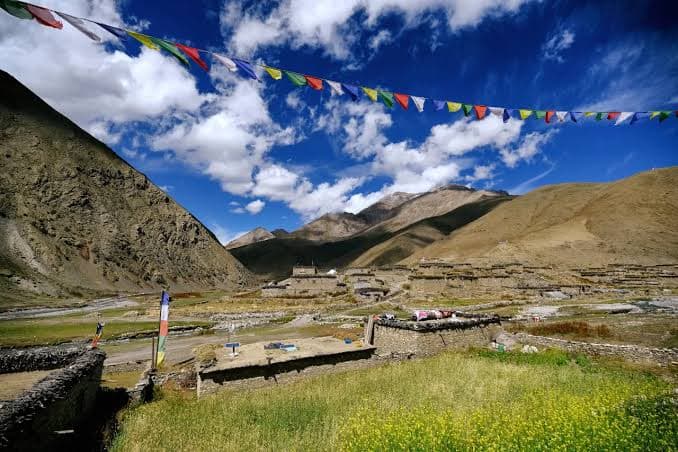
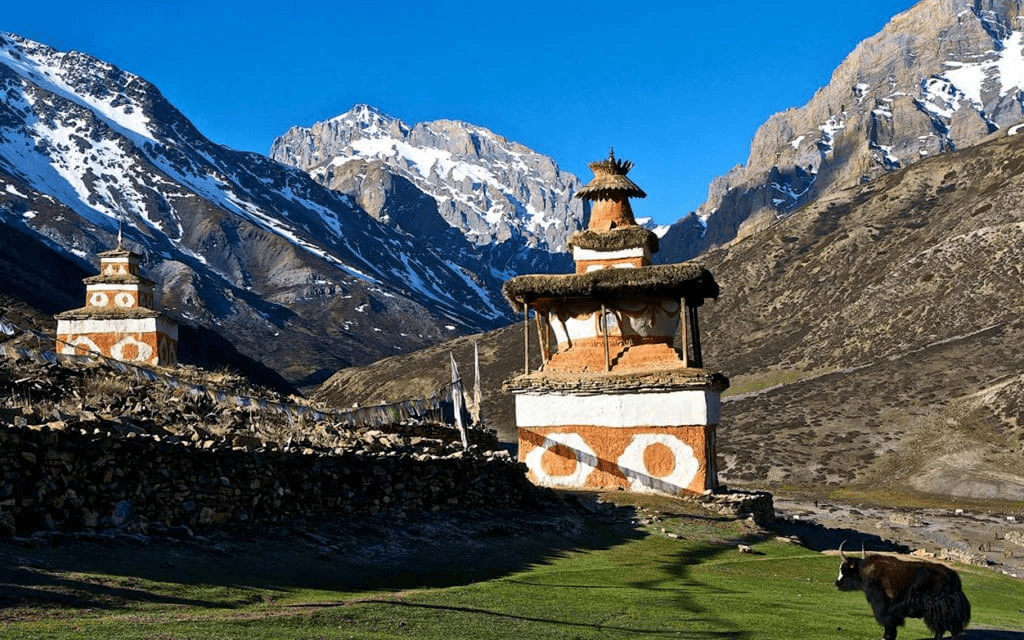
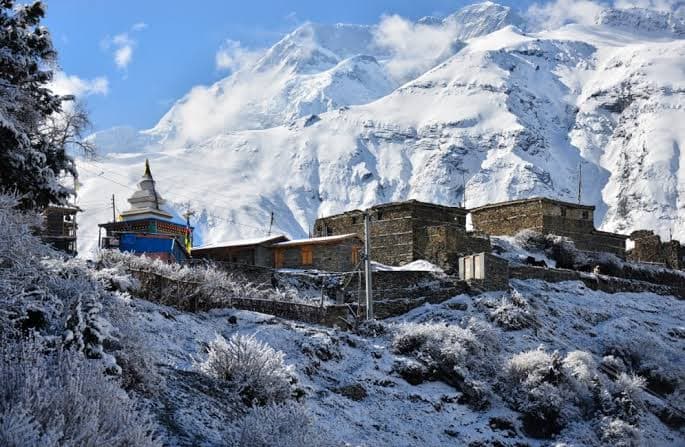
Two formidable passes — Numa La and Baga La, both above 5,000 metres — punctuate the journey, testing legs and lungs on long, high-altitude days before delivering you to the shimmering shores of Phoksundo Lake, widely regarded as one of the most beautiful bodies of water in Nepal for the striking turquoise clarity of its glacier-fed water. Along the way, the ancient Bon religion, said to predate Tibetan Buddhism, still shapes daily life in villages such as Ringmo and Dho Tarap, where flat-roofed stone houses, wind-worn chortens, and fluttering prayer flags speak to a culture defined as much by altitude and isolation as by faith. Encounters with local herders, farmers, and monastery caretakers along the trail offer a rare, unfiltered window into a way of life that has persisted largely unchanged for centuries.
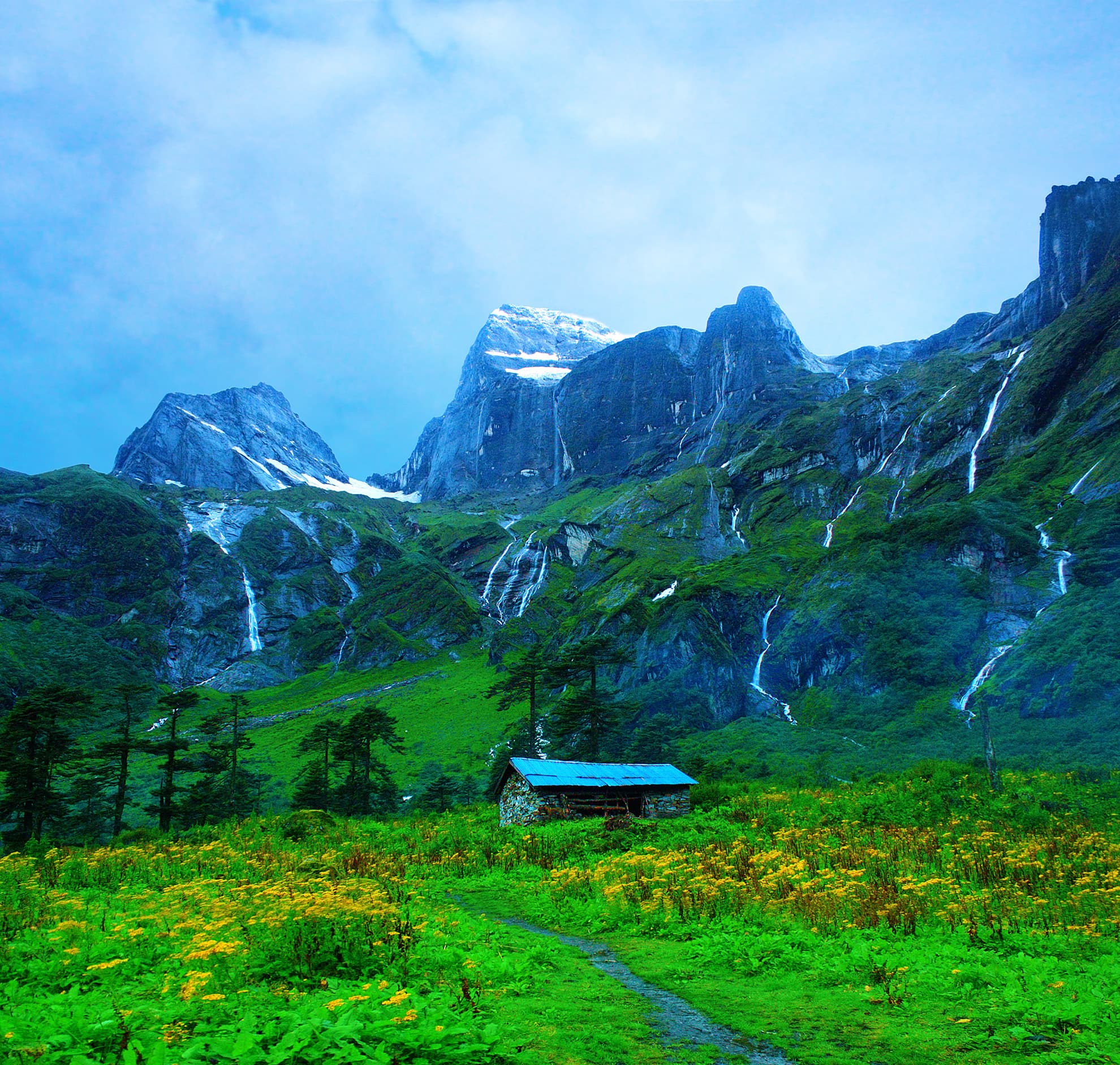
The route also carries real ecological weight. Shey Phoksundo National Park shelters the endangered snow leopard alongside blue sheep, grey wolf, marmots, and the Great Tibetan sheep, and its slopes are home to some of the most prized medicinal plants in the Himalaya, including yarsagumba, panchaule, and wild garlic. The landscape itself tells its own story as the trek unfolds, shifting day by day from lush pine forest and terraced barley fields in the lower valleys to the stark, wind-scoured high desert of Upper Dolpo — a transition as dramatic as anywhere in the Nepal Himalaya.
The journey opens gently, with two days exploring Kathmandu's UNESCO World Heritage Sites — a fitting counterpoint to the remoteness ahead, since Kathmandu itself was once the great trading hub through which routes like this one passed for centuries. From there, flights carry you west to Nepalgunj and on to the small mountain airstrip at Juphal, where the trek itself begins and the pace of the journey changes entirely. What follows is roughly two weeks largely disconnected from the outside world: no roads, minimal phone signal, and a rhythm of life set entirely by daylight, altitude, and the trail ahead. For travelers seeking genuine wilderness, a slower pace, and a part of Nepal that very few outsiders ever see, the Lower Dolpo Circuit offers one of the most complete and rewarding trekking experiences the Himalaya has to offer.
 Nepal Mountaineering Association
 Trekking Agencies' Association of Nepal
 Nepal Tourism Board
 Wilderness First Responder
 IFMGA mountain guides
 Tripadvisor
 Leave No Trace