About this trek
In the far north-west of Nepal, hard against the Tibetan border, lies Dolpo — one of the most isolated and least-visited regions in the entire Himalaya.
This is trekking at its most raw and immersive. For sixteen nights you will camp in the wilderness, carrying everything you need with a dedicated crew of guides, cooks, and pack mules, crossing three major mountain passes above 5,000 metres and walking for seven to twelve hours a day through terrain with almost no outside connectivity. It is a demanding trek, best suited to fit and experienced trekkers willing to trade comfort for genuine remoteness — but the reward is a version of Nepal that very few travelers ever see: empty trails, arid valleys guarded by snow leopards, and a culture rooted in the ancient, nature-worshipping Bon religion rather than the Buddhism more familiar elsewhere in the Himalaya.
The journey opens gently in Kathmandu, the 'city of temples', where two days are spent exploring UNESCO World Heritage Sites before flights carry you west to Nepalgunj and on to the small mountain airstrip at Juphal, where the trek itself begins. From there the landscape transforms dramatically day by day — from lush alpine forest and terraced fields in the lower valleys to the stark, high-altitude desert of Upper Dolpo, where flat-roofed stone villages such as Ringmo, Saldang, and Dho Tarap cling to hillsides beneath some of the most sacred peaks in Tibetan Bon tradition.
Along the way, the revered Shey Gompa monastery, the turquoise expanse of Phoksundo Lake, and three formidable passes — Shey La, Kang La, and Jyanta La, each above 5,000 metres — punctuate a route that is as much a spiritual and cultural journey as it is a physical one. Encounters with the farmers, herders, and monastery caretakers of Dolpo's remote villages offer a rare, unfiltered window into a way of life shaped entirely by altitude, faith, and the rhythms of the high desert. For travelers seeking genuine wilderness, real physical challenge, and a part of Nepal that remains almost untouched by the modern world, the Upper Dolpo Circuit Trek is one of the most complete and rewarding expeditions the Himalaya has to offer.
Kathmandu: The Capital City
Kathmandu is a city rich in culture, art, and history, and its nickname — the 'city of temples' — is well earned. The trip's opening days take in several of the UNESCO World Heritage Sites scattered through the valley. Kathmandu Durbar Square, also known as Basantapur or Hanuman Dhoka, stuns visitors with its intricate wood carvings and pagoda-style temples. Swayambhunath, the hilltop 'Monkey Temple', represents religious harmony in Nepal, housing both Hindu shrines and Buddhist stupas side by side. Pashupatinath Temple, one of the holiest Hindu sites in the country, sits beside the cremation ghats of the Bagmati River, drawing pilgrims from across Nepal and India and offering a striking juxtaposition of life and death within a single sacred site. And Boudhanath Stupa, one of the largest stupas in the world, remains a major pilgrimage destination for Buddhists who come from around the globe to circumambulate its vast mandala.
Geography, Wildlife & Culture of Dolpo
Geography
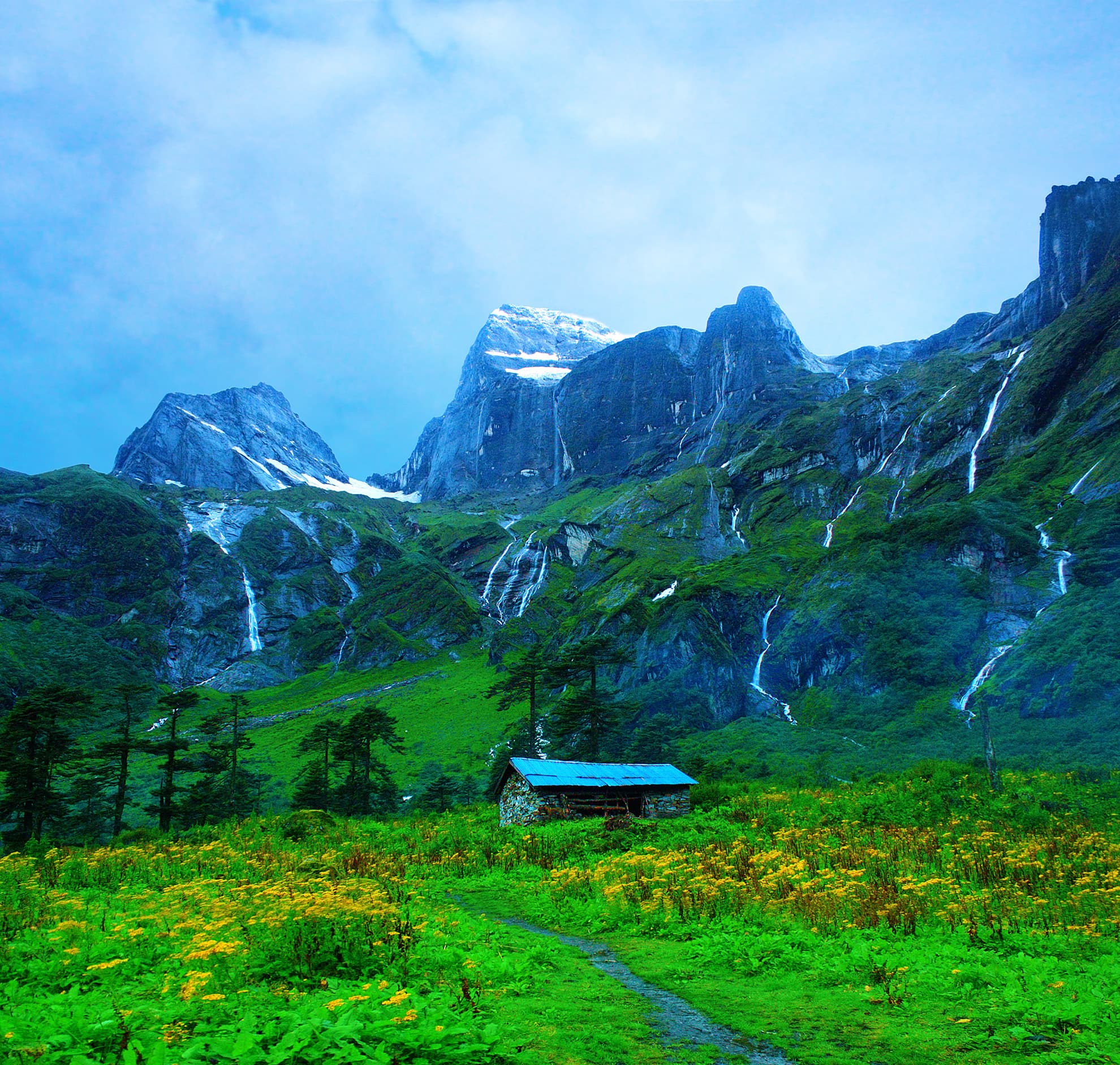
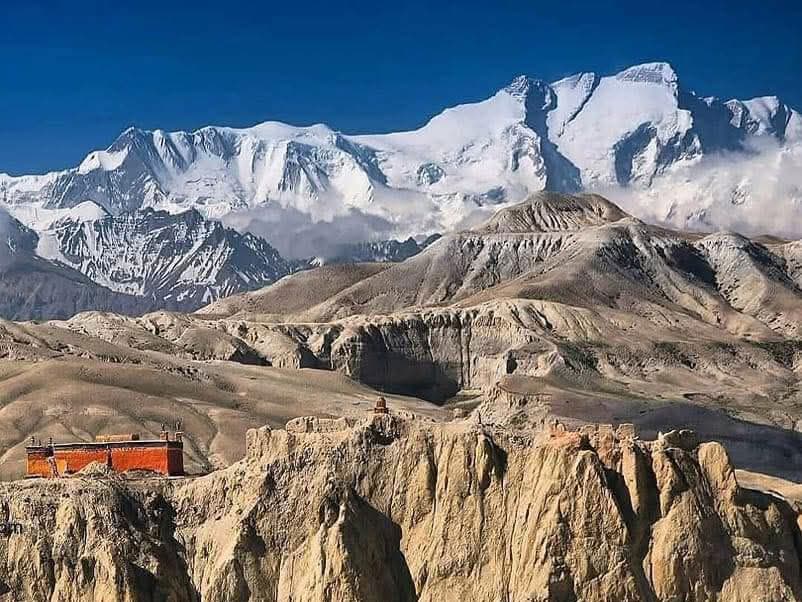
Dolpo's geography spans a remarkable range within a single trek. The lower valleys carry an alpine and subalpine climate, but as the route climbs into Upper Dolpo the landscape shifts to semi-arid and, eventually, true high-altitude desert — a frozen, wind-scoured terrain unlike almost anywhere else in Nepal. Along the way, the trail passes towering peaks, glaciers, high mountain passes, and some of the country's most dramatic arid valleys.
Flora & Fauna
The region is a haven for nature enthusiasts. Dolpo shelters the endangered snow leopard alongside blue sheep, grey wolf, marmots, lynx, fox, and wild yak, while its slopes yield some of the Himalaya's most prized medicinal herbs, including yarsagumba, panchaule, jatamasi, and wild garlic. Birdlife is similarly rich, from the snow partridge and bearded vulture to Nepal's national bird, the Himalayan monal.
The Bon Religion
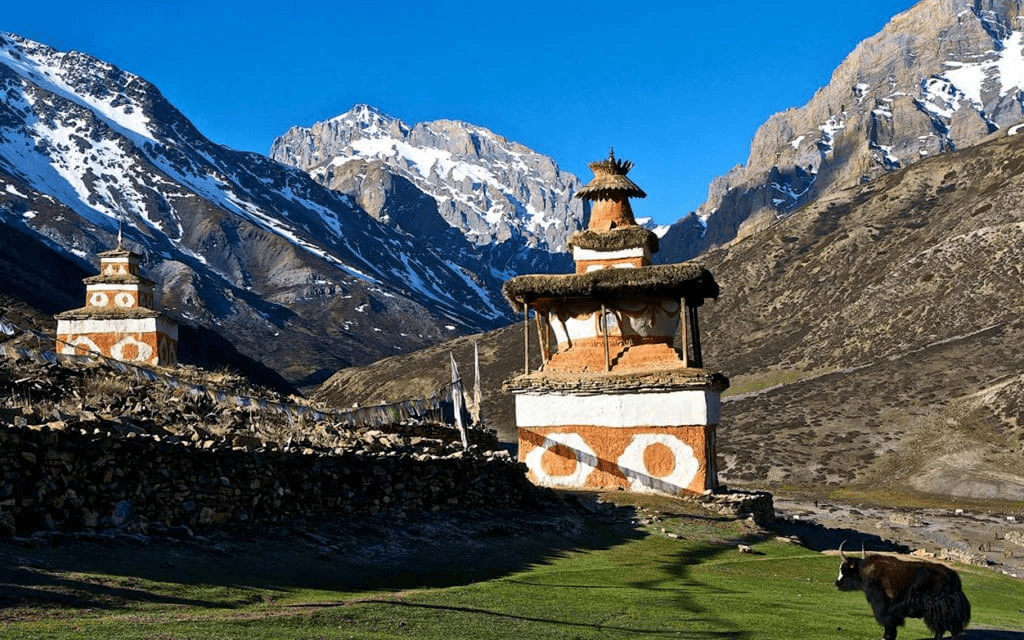
Long before Buddhism arrived in the Himalaya, the ancient Bon religion — an animistic, shamanic tradition rooted in the early Zhangzhung civilization of Tibet — took hold in Dolpo, and it remains a defining thread of local life today. Bonpo culture holds nature in the highest regard, with lakes, landscapes, and especially mountains considered sacred. The trek passes several important Bon monasteries, including the revered Shey Gompa at Shey Gompa village and Thasung Tso Ling Gompa near Phoksundo Lake.
Traditional Villages
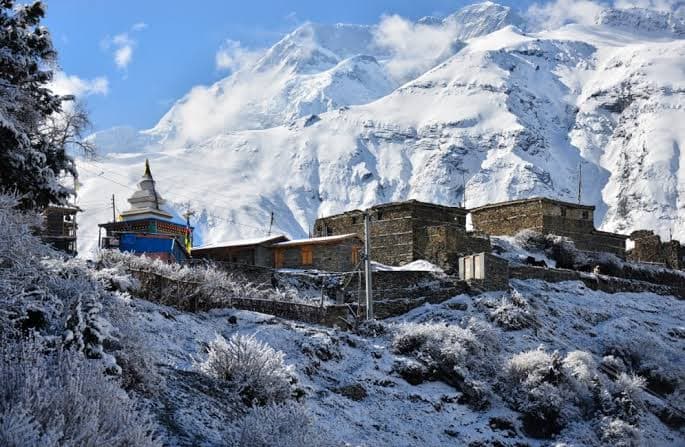
Villages such as Ringmo, Saldang, Dho Tarap, and Tokyu are among the highest permanent settlements in Nepal. Their flat-roofed stone houses blend into the arid landscape, with small or absent windows at higher altitudes to trap warmth against the bitter cold. In season, vivid green fields of barley and buckwheat bring startling colour to these otherwise muted, high-desert surroundings — and despite the remoteness and hardship of life here, visitors are consistently welcomed with genuine warmth.
 Nepal Mountaineering Association
 Trekking Agencies' Association of Nepal
 Nepal Tourism Board
 Wilderness First Responder
 IFMGA mountain guides
 Tripadvisor
 Leave No Trace